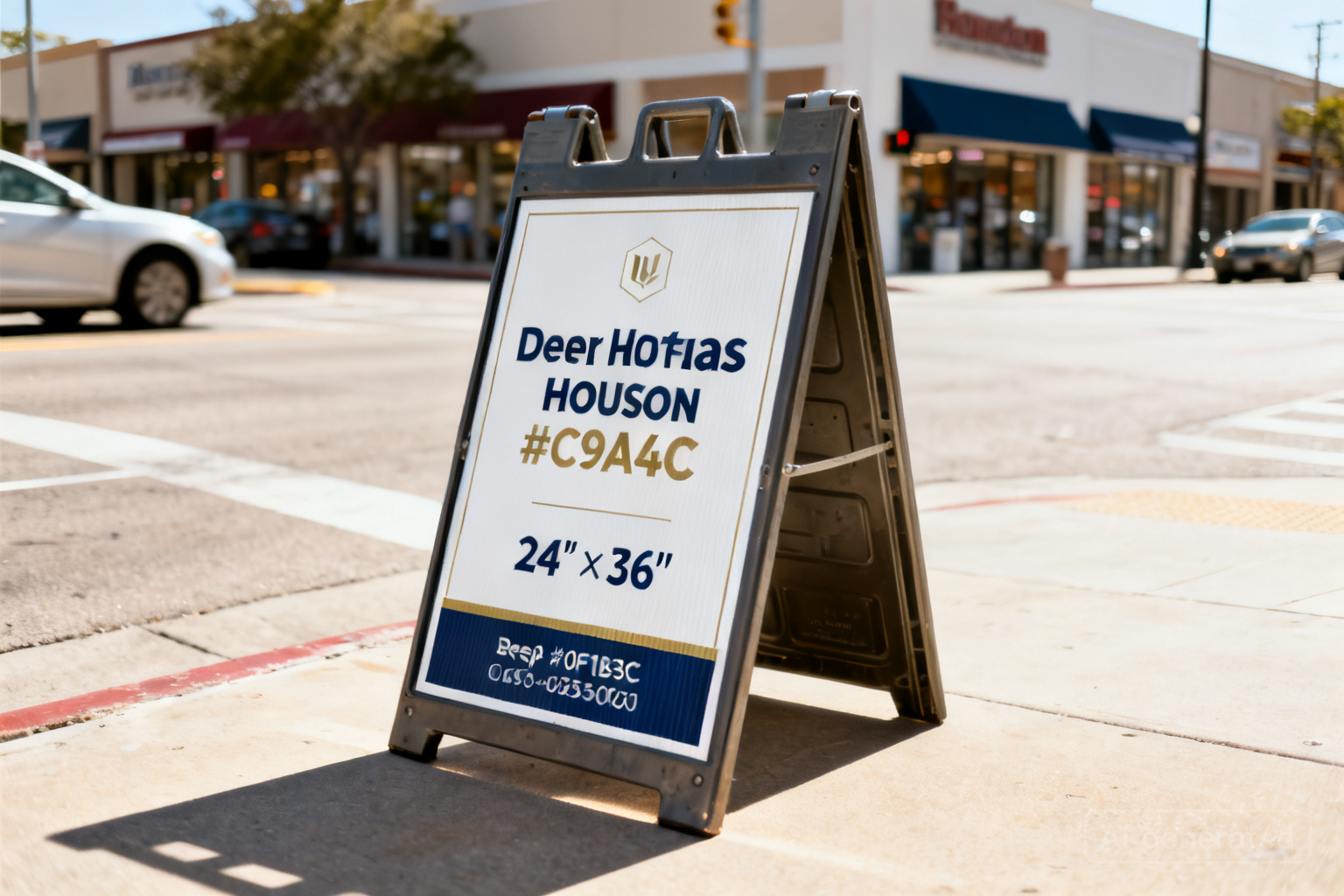
Yard signs are one of the most visible and cost-effective ways to drive foot traffic and build brand awareness in your local community. Whether you're announcing a sale, promoting a service, or simply keeping your business top-of-mind, a well-designed yard sign works 24/7 to reach potential customers in the Houston metro area.
This guide walks you through everything you need to know: how to design a sign that actually stops traffic, what materials hold up in Texas heat and humidity, where to place your sign for maximum impact, and how to order custom yard signs right here in Cypress without the wait.
Key Takeaways
- Yard signs are affordable, high-visibility marketing tools that work around the clock to reach local customers.
- Effective design combines bold colors, readable fonts, and a single clear message—less is always more.
- Material choice matters: durable outdoor-grade vinyl and corrugated plastic withstand Houston's heat, humidity, and weather.
- Strategic placement near high-traffic intersections, parking lots, and your storefront multiplies your sign's impact.
- Professional design and local ordering ensure your sign looks polished and arrives ready to install.
What Are Yard Signs and Why Do Small Businesses Use Them?
A yard sign is a freestanding outdoor advertisement, typically mounted on a metal or wooden frame, designed to grab attention from passing traffic. They're often called A-frame signs, sandwich board signs, or coroplast signs, depending on the material and style. Unlike digital ads that compete for screen time, yard signs command physical space and deliver your message to anyone within sight.
Small businesses use yard signs because they work. A sign planted at your storefront, a job site, or a high-traffic intersection reaches hundreds or thousands of people daily—many of whom may not have found you online. They're especially powerful for announcing sales, new services, grand openings, or directing customers to a specific location. In the Houston metro, where neighborhoods and commercial districts are spread out, a visible yard sign can be the difference between a customer noticing your business or driving right past.
Yard signs are also flexible: you can change your message seasonally, test different offers, or rotate designs to keep your brand fresh. They complement digital marketing, email campaigns, and social media—not replace them—but they fill a critical gap in local, in-person visibility.
Pair your yard sign with custom flyers or door hangers to create a multi-touch campaign that reinforces your message across neighborhoods.
How to Design a Yard Sign That Stops Traffic
The best yard signs follow one rule: simplicity wins. A driver has 3–5 seconds to read your sign as they pass. If your message is cluttered, uses too many fonts, or tries to say too much, it won't stick.
Start with contrast. Use colors that pop against each other—black text on white, white text on dark blue, or bright yellow with dark lettering. Avoid color combinations that blur together (like red on orange). Test your design from a distance: if you can't read it from 20 feet away, neither will a passing driver.
Your headline should be one short phrase or question that answers 'Why should I care?' Examples: 'Fresh Tacos Here,' 'Plumbing Emergency? Call Now,' 'Yoga Classes Starting Monday.' Below that, add your business name, phone number, and website. That's it. Every additional word dilutes your message.
Font choice matters too. Use bold, sans-serif fonts (like Arial or Helvetica) that are legible from a distance. Avoid thin, decorative, or script fonts—they're hard to read in sunlight and from moving vehicles. If you're unsure about design direction, professional graphic design ensures your sign looks polished and on-brand.
- Use 1–2 bold, contrasting colors
- Keep text to 5–7 words or fewer
- Choose a clean, bold sans-serif font
- Include your phone number and website
- Leave plenty of white space—don't fill every inch
Limit your sign to 5–7 words maximum. If you can't say it in that space, you're trying to say too much.
Choosing the Right Size and Material for Outdoor Durability
Yard sign size depends on your placement and budget. Common sizes are 18" × 24", 24" × 36", and 36" × 48". Larger signs grab attention from farther away, but they also cost more and require more prominent placement. For most small businesses in the Houston area, 24" × 36" is the sweet spot: visible from the street, affordable, and easy to transport.
Material choice is critical in Texas. Houston's heat, humidity, and occasional storms demand durability. The most common materials are corrugated plastic (coroplast) and outdoor-grade vinyl. Corrugated plastic is lightweight, affordable, and holds up well to sun and moisture. Vinyl is more durable and weather-resistant, making it ideal for longer-term installations or high-traffic areas.
If you're planning a larger, more permanent installation—say, at a job site or a seasonal promotion—consider pairing your yard sign with a 24" × 48" vinyl banner. Vinyl banners are built with 13oz outdoor-grade material designed for Texas weather and can be updated or reused across multiple locations.
For temporary or rotating campaigns, corrugated plastic is your friend: it's affordable, easy to store, and quick to replace. Whatever material you choose, ensure your sign has a sturdy metal frame or stand that won't tip in wind.
- Corrugated plastic (coroplast): lightweight, affordable, good for 6–12 months
- Outdoor vinyl: more durable, weather-resistant, ideal for long-term use
- Metal or wooden frames: ensure stability in wind and rain
- UV-protective coatings: extend the life of your sign in direct sunlight
Always choose outdoor-rated materials. Indoor or low-grade materials fade quickly in Houston's sun and won't survive a summer thunderstorm.
Where to Place Your Yard Sign for Maximum Visibility
Placement is everything. A beautifully designed sign in the wrong location won't reach your audience. Start by identifying high-traffic areas near your business or target customers. If you own a retail shop, place a sign on the sidewalk or lawn facing the street—not hidden behind a building or parked cars. If you're promoting a service (plumbing, landscaping, real estate), place signs at job sites, open houses, or busy intersections where your ideal customer travels.
In the Houston metro, consider traffic patterns. A sign on a busy road (like Cypress-Tomball Parkway or 290) reaches thousands daily. A sign at a neighborhood entrance or shopping center parking lot reaches local customers. Test placement: if you're unsure, start with one location and track inquiries. Move it if it's not generating results.
Check local zoning laws before placing your sign. Cypress and Houston have regulations about sign size, placement distance from the road, and duration. Some areas require permits; others have restrictions on residential streets. A quick call to your city's planning or zoning office ensures you're compliant and avoids fines.
Don't forget your storefront. Even if you're running a campaign elsewhere, a sign at your front door or parking lot entrance tells arriving customers they're in the right place and reinforces your brand.
- High-traffic intersections and main roads
- Your storefront or parking lot entrance
- Job sites or service locations
- Neighborhood entrances and shopping centers
- Near complementary businesses (with permission)
Place signs at eye level and ensure they're visible from both directions of traffic. A sign facing only one direction cuts your audience in half.
Yard Signs vs. Other Outdoor Advertising Options
Yard signs aren't your only outdoor option—but they're often the most practical for small budgets. Here's how they stack up. Billboards reach more people but cost significantly more and require long-term contracts. Digital billboards are even pricier and best for large brands with big budgets. Yard signs are affordable, flexible, and you control the message and placement.
Vehicle wraps are eye-catching and mobile, but they're a larger investment and work best for service businesses (plumbers, contractors, delivery services) that spend time on the road. A yard sign costs a fraction of a wrap and doesn't require vehicle modifications.
Direct mail—like postcards or door hangers—reaches specific addresses and is excellent for targeted campaigns. But it requires printing, delivery, and has a lower response rate than a visible, always-on yard sign. Many successful businesses use both: a yard sign for broad local awareness and direct mail for targeted offers.
Vinyl banners are similar to yard signs but larger and more permanent. They work well for events, grand openings, or seasonal promotions. For ongoing, everyday visibility, a standard yard sign is often more practical.
Use yard signs as part of a broader local marketing strategy. Combine them with digital ads, social media, and direct mail for maximum reach.
How to Order Custom Yard Signs in Cypress and the Houston Metro
Ordering custom yard signs locally means fast turnaround and the ability to see samples before you commit. At 53Printers in Cypress, you can design, order, and pick up your signs without waiting for shipping or dealing with national print shops that don't understand local needs.
Start by deciding on size, material, and quantity. Do you need one sign or five? Will you rotate messages or keep the same design? Once you've answered those questions, work with a designer to create your artwork. If you don't have a design ready, professional graphic design services can build something from scratch that's on-brand and optimized for your message.
The ordering process is straightforward: submit your design, approve a proof, and your signs are printed on outdoor-grade materials and cut to size. You can pick up locally or arrange delivery to your storefront or job site. Having your signs made locally means you can make changes quickly if needed—no waiting for international shipping or dealing with customer service delays.
Get a free quote to see pricing and turnaround. Bring your design or a description of what you want, and 53Printers will walk you through options and timeline.
Order extra signs so you can rotate messages or replace worn signs without waiting for a new print run.
Yard Sign Installation and Maintenance Tips
Once your signs arrive, installation is simple but important. Use sturdy metal frames or stands designed for outdoor use. Ensure the base is weighted or anchored so wind doesn't tip it over. If you're placing a sign in grass, drive the frame legs deep into the soil and use stakes or guy-wires for extra stability in storms.
Check your sign regularly—at least monthly. Sun and weather fade colors, rain can damage edges, and wind can loosen bolts. Wipe down your sign with a soft cloth and mild soap to keep it looking fresh. If you notice peeling, fading, or damage, repair or replace it promptly. A worn, damaged sign reflects poorly on your business.
In Houston's heat and humidity, inspect vinyl or plastic for mold or mildew, especially during the rainy season. A quick rinse with water and a mild cleaner keeps your sign looking professional. If you're rotating messages seasonally, store off-season signs in a dry place to extend their lifespan.
Plan to refresh your signs annually or every 18 months, depending on weather exposure and material. Faded or outdated signs lose effectiveness. Fresh signs keep your brand visible and show customers you're active and professional.
- Choose a sturdy frame or stand rated for outdoor use
- Anchor or weight the base to prevent tipping in wind
- Inspect monthly for fading, damage, or loose bolts
- Clean with mild soap and water to remove dirt and mold
- Replace or refresh annually to maintain professional appearance
Take photos of your sign's placement and condition monthly. This helps you track wear and plan replacements before signs become an eyesore.
Common Mistakes to Avoid When Using Yard Signs
The biggest mistake is overcrowding your message. Businesses often try to fit their whole story onto a yard sign: hours, services, phone number, website, and a coupon. The result is cluttered, unreadable chaos. Remember: a driver has 3–5 seconds. One clear message wins every time. Save the details for your website or a follow-up custom flyer.
Another common error is poor placement. A beautiful sign hidden behind a tree, facing the wrong direction, or placed too close to the road (violating local ordinances) won't work. Scout your location carefully and check zoning rules before installation.
Neglecting maintenance is equally damaging. A faded, dirty, or damaged sign tells customers your business is neglected. Invest in regular upkeep. It costs little and pays back in credibility.
Finally, don't forget to include a clear call to action. 'Call now,' 'Visit us today,' or 'Learn more at [yourwebsite.com]' tells people what to do next. Without it, they'll just read and move on.
Test your sign from a moving vehicle at normal driving speed. If you can't read it comfortably, redesign it.
Frequently Asked Questions
How long do yard signs typically last in Houston weather?+
Corrugated plastic signs last 6–12 months with regular maintenance. Outdoor-grade vinyl signs last 18–24 months or longer, depending on sun exposure and weather. Both materials are designed to withstand Houston's heat and humidity, but fading and wear are normal. Plan to refresh or replace annually for best results.
Do I need a permit to place a yard sign in Cypress or Houston?+
Yes, most areas require permits or have zoning restrictions on sign size, placement, and duration. Cypress and Houston have specific ordinances that vary by neighborhood and commercial district. Contact your local city or county planning office to confirm requirements before placing your sign. 53Printers can advise on local regulations when you order.
What size yard sign should I order for my business?+
The most common size for small businesses is 24" × 36", which is visible from the street, affordable, and easy to transport. Larger signs (36" × 48") grab attention from farther away but cost more. Smaller signs (18" × 24") work for tight spaces or low-traffic areas. Consider your placement and budget when deciding.
Can I use the same yard sign design for multiple locations?+
Absolutely. If you're running a multi-location campaign or rotating signs across job sites, order multiple copies of the same design. This keeps your message consistent and reduces design costs. You can also update designs seasonally or for different promotions and reorder as needed.
What's the difference between a yard sign and a vinyl banner?+
Yard signs are typically smaller (18"–48"), freestanding, and designed for temporary or rotating use. Vinyl banners are larger, more durable, and often hung on buildings, fences, or frames for longer-term visibility. For everyday local marketing, a yard sign is usually more practical. For events or seasonal promotions, a vinyl banner works well.
How do I design an effective yard sign if I don't have a designer?+
Keep it simple: one bold headline (5–7 words max), your business name, phone number, and website. Use high-contrast colors, a clean sans-serif font, and plenty of white space. If you're unsure, professional graphic design services can create something polished and on-brand that's optimized for readability and impact.
Can I order yard signs with custom shapes or materials?+
Yes. While standard rectangular signs are most common, many print shops offer custom shapes and materials. Vinyl, corrugated plastic, foam board, and even wood are options. Contact 53Printers for a quote on custom sizes and materials—local ordering means you can discuss options and see samples before committing.
Ready to Order Custom Yard Signs for Your Business?
Let 53Printers help you design and print yard signs that work for your Houston-area business. Local turnaround, professional design, and outdoor-grade materials built for Texas weather.
Get a Free Quote